 DIS RUBRIC · EST. 2026
An integrity referee for public debates. We score how each side argued, never who won.
Sam Harris vs Jordan Peterson | God, Atheism, The Bible, Jesus - Part 1
Head to head · scored against the rubric, not each other
Watch
The final scores. Press play: they reset to zero and assemble as the evidence lands.
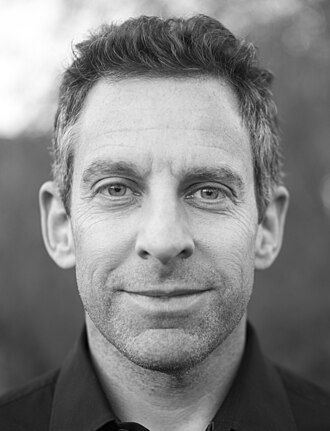
Sam Harris
Live90
CRUXN=13
CLEAN3,442W
DEALTN=13
TALK205T
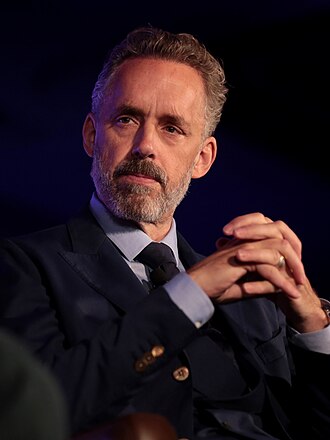
Jordan Peterson
Live91
CRUXN=18
CLEAN3,322W
DEALTN=18
TALK196T
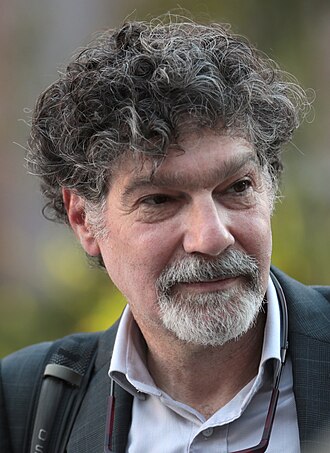
Bret Weinstein
Live85*
CRUXN=2
CLEAN1,254W
DEALTN=2
TALK77T
The Stats
Every point, the score over time, and what the rubric recordedWhere each score came from · segment width is the weighted contribution
Sam89Jordan76
CRUX45%confronted the point · talked around it · evadedCLEAN30%logical fallacies · record denial · strawmanDEALT15%concessions · owned errors · common groundTALK10%interruptions · talking over
Every debater's score across the hour · dots are scored moments · click any dot to watch it
All points & topics debated
INTROThe debate hasn't started scoring yetIntroductions and framing · nothing charged or credited▸
Table of Contents
Every point, in order. Jump to any of them
Jordan+6DEALTEthics between two catastrophesraised by Jordan · Sam confronted it · at 7:44 ▸▸
THE CRUX: Harris's moral project is driven by grounding ethics so as to avoid both fundamentalism/dogmatism and moral relativism: affirm this framing or correct it.“one of the good ways to have a discussion with someone is to tell them what you think they think until they think that what you said reflects what they said... partly what's driving you... is that you want to ground a structure of ethics in something solid. And there's two... catastrophes... religious fundamentalism, and the other... moral relativism. Is that— is that reasonable?”Jordan Peterson · 6:57 · U-009 ▶
“Yeah, that's good.”Sam Harris · 7:44 · U-010 ▶
Confronted the point Peterson put Harris's motivating position to him (grounding ethics between fundamentalism and relativism); Harris affirmed the restatement as accurate.2.6DIS · earned in full
the math ▸
importance ×2 = 2 of 35 weighted challenge points · × 45% (crux share of DIS) = 2.6 DIS earned in fullSteelman of Harris's moral project Jordan Peterson Peterson deliberately restates Harris's motivating position at its strongest, using an explicit method of putting the opponent's argument back in terms they would accept, and Harris confirms the restatement is accurate. This is a steelman. High confidence.+6DEALT
Sam+3DEALTJordan−1.8CRUXWell-being as the ground of moralityraised by Sam · Jordan talked around it · at 9:49 ▸▸
THE CRUX: 'Well-being' as an elastic term subsumes everything one could reasonably value morally, including the positive side beyond mere suffering: accept it or show what it fails to capture.“Yeah, I would just add to that the positive side of the continuum as well. So, as you know, the phrase I use, or the word I use for this, is well-being. And I know from having— I don't think we spoke about this on my podcast, but from having seen you in other interviews, I think you think that…”Sam Harris · the cited evidence · 8:47 · U-012 ▶ · full turn ▸
Talked around it Jordan Peterson The crux asked Peterson to accept that well-being subsumes all one could value or to show what it fails to capture. Peterson redirected to why he focuses on suffering (easier to gain agreement) without affirming or denying the subsumption claim. What the crux required was never addressed.−1.8DIS
the math ▸
importance ×2 × (1 − 0.15 earned) = 1.7 of 43 weighted challenge points · × 45% (crux share of DIS) = −1.8 DIS“in reading your book, I realized there's a point of contact here because you use the word Being, capital B Being, as though it were imbued with significant gravitas. And so for me, and I agree with you, that's an appropriate use of Being.”Sam Harris · 9:17 · U-012 ▶
Common ground on Being and well-being Harris identifies a genuine point of contact with Peterson's use of 'Being' and builds his own well-being concept onto it rather than passing over the overlap. Medium confidence.+3DEALT
±0Moral realismraised by Sam · Jordan confronted it · at 11:07 ▸▸
THE CRUX: There are objectively right and wrong answers to moral questions (those who wanted Auschwitz were wrong): affirm, deny, or qualify.“there are genuine differences between the proper way of behaving morally and the improper way of behaving morally. And I think that they are grounded in human universals.”Jordan Peterson · 11:24 · U-019 ▶
Confronted the point Peterson affirmed moral realism, stating there are genuine differences between proper and improper moral behaviour grounded in human universals.2.1DIS · earned in full
the math ▸
importance ×2 = 2 of 43 weighted challenge points · × 45% (crux share of DIS) = 2.1 DIS earned in full±0What distinguishes religious from secular totalitarianismraised by Jordan · Sam confronted it · at 16:38 ▸▸
THE CRUX: Since Nazi/Soviet atrocities matched religious dogmatism without belief in God, identify what commonality makes both pernicious independent of any supernatural claim.“The problem is dogmatism. The overarching problem is believing things strongly on bad evidence.”Sam Harris · 16:39 · U-030 ▶
Confronted the point Harris named the shared feature independent of the supernatural: dogmatism, believing strongly on bad evidence that cannot be revised through conversation.2.6DIS · earned in full
the math ▸
importance ×2 = 2 of 35 weighted challenge points · × 45% (crux share of DIS) = 2.6 DIS earned in full±0Atheism not responsible for 20th-century atrocitiesraised by Sam · Jordan both moved on · at 16:28 ▸▸
THE CRUX: Stalinism/Nazism/fascism were not expressions of atheism; what was wrong with them was how they resembled religion (personality cults, dogmatism, blasphemy as capital offence).“Well, so, I mean, in some ways you're recapitulating an argument I've made, and this is an argument that I would make against you were you to claim claim, as you have elsewhere, that atheism is responsible for the greatest atrocities of the 20th century. The idea that Stalinism and Nazism and…”Sam Harris · the cited evidence · 14:58 · U-028 ▶ · full turn ▸
Mutually dropped Jordan Peterson Harris raised this preemptively; Peterson did not advance an atheism-blame claim in this debate and the thread moved to the commonality question. No realistic demand went unmet. No one is charged: both sides let it go.±0DIS · no fault
Sam+3DEALTJordan−0.5TALKJordan+4.5DEALTThe problem is dogmatism, not religionraised by Sam · Jordan confronted it · at 17:33 ▸▸
THE CRUX: The overarching danger is dogmatism, believing things strongly on bad evidence that can't be revised through conversation, not religion per se.“the commonality seems to be something like claims of absolute truth at some level that can't be— that you're no longer allowed to discuss.”Jordan Peterson · 17:06 · U-031 ▶
Confronted the point Peterson agreed the commonality is claims of absolute truth that can no longer be discussed, endorsing that the danger is dogmatism, and named it a point of agreement.3.1DIS · earned in full
the math ▸
importance ×3 = 3 of 43 weighted challenge points · × 45% (crux share of DIS) = 3.1 DIS earned in full“the process of free speech is the process by which dogmatic errors are rectified, and so it has to be put at the pinnacle of the hierarchy of values, something like that.”Jordan Peterson · 17:48 · U-033 ▶
“Yeah, yeah, I think you and I totally agree about the primacy of free speech.”Sam Harris · 17:58 · U-034 ▶
Common ground on primacy of free speech Jordan Peterson Peterson names a genuine agreement about free speech as the mechanism that corrects dogmatic excess and builds it into his account of governance, and Harris affirms the agreement. High confidence.+4.5DEALT
“I've got no problem with the buildings and the music and the paintings and—”Sam Harris · 18:48 · U-039 ▶
“Wait, wait, no, that— wait a minute, wait a minute. That's not a trivial point, and it's not just a joke, because the buildings and the music are very important parts of the religious process.”Jordan Peterson · 18:52 · U-040 ▶
Interruption to rebut Peterson cuts into Harris's unfinished sentence to rebut the point about religion's music and buildings. Medium confidence. Mirror check: Harris also interrupts Peterson elsewhere in this window and is charged separately.−0.5TALK
“the buildings and the music are very important parts of the religious process... Sam is throwing out the baby with the bathwater there.”Jordan Peterson · 18:58 · U-040 ▶
“I've got no problem— in fact, I'm deeply interested in the phenomenology of spiritual experience... that phenomenology is subjectively real.”Sam Harris · 19:11 · U-041 ▶
Grants value in religious phenomenology Responding to Peterson's pushback, Harris grants that spiritual phenomenology is real and of deep interest, finding common ground on the value of religious experience while maintaining his critique of dogma. Medium confidence.+3DEALT
Sam+3DEALTPrimate aggression predates religionraised by Jordan · Sam confronted it · at 22:38 ▸▸
THE CRUX: Chimps commit tribal atrocity without religion, so the roots of group violence are deeper than religious dogma and can't be reduced to metaphysical belief.“Obviously, the problem of primate aggression, which we've inherited along with the chimps, is deeper, or at least different, than the problem of religious violence or totalitarian political structures that get the worst out of people.”Sam Harris · 22:38 · U-045 ▶
Agreement that group violence predates religion Harris grants Peterson's point that the roots of tribal violence are deeper than religion, a concession that partly cuts against his emphasis on religion, before reframing to his own concern. Medium confidence.+3DEALT
“the problem of primate aggression, which we've inherited along with the chimps, is deeper, or at least different, than the problem of religious violence”Sam Harris · 22:38 · U-045 ▶
Confronted the point Harris agreed the roots of primate/tribal aggression are deeper than religious violence.2.6DIS · earned in full
the math ▸
importance ×2 = 2 of 35 weighted challenge points · × 45% (crux share of DIS) = 2.6 DIS earned in fullJordan−2.7CRUXReligious dogma leads normal people to atrocityraised by Sam · Jordan talked around it · at 27:02 ▸▸
THE CRUX: Psychologically normal people commit atrocities (ISIS taking sex slaves as sacrament) purely because they believe religious doctrines wholeheartedly on bad evidence, not from ape-like urges.“Okay, so let's take that claim apart for A minute, because that's not your claim specifically, the claim that you were describing. See, because that's, that's really not the claim that religious fundamentalists make. The claim they make is worse than that, because they claim that the Quran, say, or…”Jordan Peterson · the cited response · 26:31 · U-050 ▶ · full turn ▸
Talked around it The crux held that psychologically normal people commit atrocities purely from believing doctrines on bad evidence, not ape urges. Peterson engaged the topic by refining the fundamentalist claim (they conflate text with interpretation) but did not affirm or deny the belief-drives-atrocity thesis. What the crux required was never addressed.−2.7DIS
the math ▸
importance ×3 × (1 − 0.15 earned) = 2.6 of 43 weighted challenge points · × 45% (crux share of DIS) = −2.7 DIS±0Fundamentalists conflate text with their interpretationraised by Jordan · Sam confronted it · at 27:47 ▸▸
THE CRUX: The fundamentalist error is not just claiming the book is God's word but assuming their own interpretation is omniscient/absolute: this makes the problem interpretive, not textual.“some of the claims in the book are not at all hard to parse. In fact, many of them can only be honestly interpreted one way.”Sam Harris · 27:56 · U-053 ▶
Confronted the point Harris denied the problem is merely interpretive, arguing some injunctions can only honestly be read one way, so the text itself is the difficulty.2.6DIS · earned in full
the math ▸
importance ×2 = 2 of 35 weighted challenge points · × 45% (crux share of DIS) = 2.6 DIS earned in fullJordan+7.5DEALTJordan−1.6CRUXSome scriptural injunctions are unambiguous atrocitiesraised by Sam · Jordan half-answered it · at 44:55 ▸▸
THE CRUX: Passages like cutting off thieves' hands, stoning non-virgin brides, and condoning slavery can only honestly be read one way and need no context to be recognized as wrong.“what does that do to Moses's laws of war? This is not a narrative. This is instructions about what to do when you invade a foreign land.”Bret Weinstein · 41:11 · U-081 ▶
“Yeah, the Old Testament's a brutal document.”Jordan Peterson · 41:34 · U-082 ▶
Concedes the Old Testament is brutal Pressed on Moses's laws of war, Peterson grants that the Old Testament is a brutal document, giving real ground while continuing to defend his narrative-reading claim. High confidence.+3DEALT
“there are passages in the Old Testament that tell you to stone a girl or a woman who's not a virgin on her wedding night, take her to her father's doorstep and stone her to death”Sam Harris · 44:34 · U-097 ▶
“We can probably agree that those are wrong, so there's another point of agreement.”Jordan Peterson · 44:47 · U-098 ▶
Confronted part of it Peterson granted the specific injunctions are wrong, but held that context bears on meaning, so he did not fully concede that such passages need no context to be recognized as wrong.−1.6DIS
the math ▸
importance ×3 × (1 − 0.5 earned) = 1.5 of 43 weighted challenge points · × 45% (crux share of DIS) = −1.6 DISAgreement that stoning passages are wrong Peterson names agreement with Harris that specific scriptural injunctions such as stoning are wrong, marking it explicitly as a point of agreement. Medium confidence.+4.5DEALT
Bret−0.5TALKReligious texts do have an update mechanismraised by Bret · Sam confronted it · at 33:33 ▸▸
THE CRUX: Most traditions with slavery in their holy books no longer practice it (Christians abolished slavery), so the dogma clearly can be updated: reconcile this with the 'can't be edited' claim.“Okay, okay, so— So, but I want to ask you a little bit about your feeling about—”Jordan Peterson · 32:05 · U-056 ▶
“Wait, before you move on, I want to get each of you to clarify something... But clearly, most of the traditions in which it's written into the holy book don't practice slavery... So clearly there is the capacity for an update mechanism.”Bret Weinstein · 32:19 · U-057 ▶
Moderator cuts in to advance own argument Weinstein cuts off Peterson mid-sentence, and rather than only refereeing he advances his own argument that religious texts have an update mechanism, stepping onto the floor as an actor. Because the cut-off carries his own point it is charged as an argumentative interruption. Medium confidence.−0.5TALK
“the doors leading out of this kind of fundamentalism don't open from the inside. They get bashed open from the outside.”Sam Harris · 33:54 · U-067 ▶
Confronted the point Harris denied an internal update mechanism, arguing reform is bashed open from outside rather than emerging from the text.2.6DIS · earned in full
the math ▸
importance ×2 = 2 of 35 weighted challenge points · × 45% (crux share of DIS) = 2.6 DIS earned in full±0Doors out of fundamentalism open from outsideraised by Sam · Jordan confronted it · at 42:36 ▸▸
THE CRUX: Reform of religion comes from external secular/humanist/scientific pressure, not internal theology; abolitionist Christians were on the losing side of the honest textual reading.“The English Protestants wouldn't have agreed with that because, like I said, they were at the forefront of the fight against slavery.”Jordan Peterson · 42:36 · U-088 ▶
Confronted the point Peterson disputed that reform came from outside, arguing Christians using Christian belief were at the forefront of abolition.2.1DIS · earned in full
the math ▸
importance ×2 = 2 of 43 weighted challenge points · × 45% (crux share of DIS) = 2.1 DIS earned in fullJordan−5CLEANJordan−1CRUXAre texts unambiguously unacceptable through a modern lensraised by Bret · Sam confronted it · at 44:51 ▸ · Jordan half-answered it · at 37:52 ▸▸
THE CRUX: There are things simply written into religious texts that we now understand to be wrong, not merely misunderstood complexity: accept or deny.“Would you agree that there are things written into these religious texts that are unambiguously unacceptable viewed through a modern lens... but there are things that are just written in there that we now understand to be wrong?”Bret Weinstein · 36:23 · U-073 ▶
“the first thing I would say is that we have to be very careful about equating all the religious texts... that's something we can have a discussion about a little bit later.”Jordan Peterson · 36:44 · U-074 ▶
“Did you answer Brett's question? Because I think—”Sam Harris · 37:50 · U-077 ▶
Deferral of the moderator's direct question Jordan Peterson NOMINATION for the reconciliation pass. Faced with Weinstein's direct yes/no question, Peterson first pivots to a different matter (whether all religious texts can be equated) and defers, and only returns to the question after Harris flags that it was not answered. The eventual answer is priced by the point's verdict; this nominates the escape that preceded it. Medium confidence.−5CLEAN
“sentence by sentence, yes, you're correct. Paragraph by paragraph, perhaps.”Jordan Peterson · 38:04 · U-078 ▶
Confronted part of it After deferring, Peterson conceded that sentence by sentence Weinstein is correct, while maintaining that narrative context conditions meaning; he did not fully grant the 'simply written and wrong' framing.−1DIS
the math ▸
importance ×2 × (1 − 0.5 earned) = 1 of 43 weighted challenge points · × 45% (crux share of DIS) = −1 DIS“you don't have to read the book to the end to know that it's wrong. I mean, you can get that from the paragraph.”Sam Harris · 44:51 · U-099 ▶
Confronted the point Harris agreed there are things written in the texts recognizable as wrong from the paragraph alone, without any misunderstood complexity.2.6DIS · earned in full
the math ▸
importance ×2 = 2 of 35 weighted challenge points · × 45% (crux share of DIS) = 2.6 DIS earned in fullSam−0.5TALKThe Bible must be read as a coherent narrativeraised by Jordan · Sam confronted it · at 48:40 ▸ · Bret confronted it · at 41:35 ▸▸
THE CRUX: Individual sentences must be interpreted in the context of the whole developmental narrative (beginning read in light of the end), not extracted in isolation.“I don't know that reading that portion in light of the end, even if you call the end the New Testament, I don't know that it changes Moses's laws of war”Bret Weinstein · 41:37 · U-083 ▶
Confronted the point Weinstein contested the narrative-reading claim on Moses's laws of war, arguing they are instructions, not narrative, and the ending does not change their meaning.45DIS · earned in full
the math ▸
importance ×2 = 2 of 2 weighted challenge points · × 45% (crux share of DIS) = 45 DIS earned in full“But it doesn't supersede it on every point. I mean, this is the problem.”Sam Harris · 41:58 · U-085 ▶
Confronted the point Harris disputed the narrative-reading claim, arguing the New Testament does not supersede the Old on every point and that such interpretive games can be played with any text.2.6DIS · earned in full
the math ▸
importance ×2 = 2 of 35 weighted challenge points · × 45% (crux share of DIS) = 2.6 DIS earned in full“Well, I don't think I am, Sam, because I think that the fundamental message in the New Testament, for example, is that—”Jordan Peterson · 42:53 · U-090 ▶
“So then you're acknowledging the Old Testament—”Sam Harris · 42:59 · U-091 ▶
Interruption to press a point Harris cuts into Peterson's unfinished sentence to score the point that the Old Testament stands as a book with diabolical passages. Medium confidence. Mirror check: Peterson interrupts Harris elsewhere and is charged separately.−0.5TALK
Jordan+3DEALTNarrative reading doesn't rescue Moses's laws of warraised by Bret · Jordan confronted it · at 41:50 ▸▸
THE CRUX: Moses's laws of war are instructions, not narrative, and reading them in light of the New Testament ending doesn't change their unacceptability.“what does that do to Moses's laws of war? This is not a narrative. This is instructions about what to do when you invade a foreign land.”Bret Weinstein · 41:11 · U-081 ▶
“Yeah, the Old Testament's a brutal document.”Jordan Peterson · 41:34 · U-082 ▶
Concedes the Old Testament is brutal Pressed on Moses's laws of war, Peterson grants that the Old Testament is a brutal document, giving real ground while continuing to defend his narrative-reading claim. High confidence.+3DEALT
“if you take the New Testament seriously, it does, because it's a document that supersedes it. And I think there's actually technical reasons why it supersedes it.”Jordan Peterson · 41:50 · U-084 ▶
Confronted the point Peterson met the challenge by asserting that the New Testament supersedes the Old Testament laws for technical reasons.2.1DIS · earned in full
the math ▸
importance ×2 = 2 of 43 weighted challenge points · × 45% (crux share of DIS) = 2.1 DIS earned in fullJordan−1CRUXFundamentalism has an interpretive advantageraised by Sam · Jordan half-answered it · at 1:22:22 ▸▸
THE CRUX: Literal readings are straightforward and self-consistent, so moving away from the text to make dogmas palatable is playing tennis without the net: importing outside values not in the text.“as you move away from the text, you fractionate the moral belief system, and you end up with a nihilistic situation.”Jordan Peterson · 1:20:13 · U-236 ▶
Confronted part of it Peterson engaged the 'tennis without a net' charge by arguing that moving from the text fractionates belief toward nihilism and that updating must supersede dogma, but did not directly rebut that he imports outside values not in the text.−1DIS
the math ▸
importance ×2 × (1 − 0.5 earned) = 1 of 43 weighted challenge points · × 45% (crux share of DIS) = −1 DISSam+4.5DEALTJordan−4.5CLEANAn a priori interpretive framework mediates facts and valuesraised by Jordan · Sam confronted it · at 1:45:34 ▸▸
THE CRUX: You cannot get directly from facts to values; an interpretive structure (Kant) stands between us and the facts: accept this, and if so specify the nature of that structure.“I said you can make exactly the same objection with the world of facts is there's an infinite number of facts, and there's an infinite number of potential interpretations. And so tracking the pathway from the fact to a value is actually impossible. It's the same argument with regards to biblical interpretation.”Jordan Peterson · 48:59 · U-114 ▶
“I don't think that's a good analogy. There are more and less plausible interpretations of any situation, any data, and any text”Sam Harris · 49:21 · U-115 ▶
“But you can do that with any set of facts too.”Jordan Peterson · 49:42 · U-116 ▶
Analogy restated rather than defended NOMINATION for the reconciliation pass. Peterson equates interpreting a text with interpreting facts; when Harris challenges the mapping directly ('I don't think that's a good analogy'), Peterson restates the equivalence rather than defending the correspondence. Medium confidence.−4.5CLEAN
“It's like, no, there is no unmediated fact.”Jordan Peterson · 1:45:31 · U-373 ▶
“Well, there is, yes. Even facts aren't unmediated facts. I mean, you can't judge something to be factual without presupposing the validity of certain intuitions, like that causes precede events”Sam Harris · 1:45:34 · U-374 ▶
Partial concession that facts are interpretively mediated Harris grants Peterson's core epistemological claim that facts are not apprehended without a mediating interpretive structure, while holding the rest (that this does not make all intuitions equally respectable). Real ground given on a central point.+4.5DEALT
“Even facts aren't unmediated facts. I mean, you can't judge something to be factual without presupposing the validity of certain intuitions, like that causes precede events”Sam Harris · 1:45:35 · U-374 ▶
Confronted the point Harris granted the core epistemological claim that no fact is apprehended unmediated, while denying the mediating structure is best captured by stories.3.9DIS · earned in full
the math ▸
importance ×3 = 3 of 35 weighted challenge points · × 45% (crux share of DIS) = 3.9 DIS earned in fullJordan−4.5CLEANJordan−0.5TALKStories/personalities as the interpretive intermediaryraised by Jordan · Sam confronted it · at 1:01:59 ▸▸
THE CRUX: Harris himself resorts to storytelling (the jungle vs good-life fictions) to ground his moral axiom, showing some a priori intuitions take the form of stories/personalities: accept or refute the primacy of story.“I said you can make exactly the same objection with the world of facts is there's an infinite number of facts, and there's an infinite number of potential interpretations. And so tracking the pathway from the fact to a value is actually impossible. It's the same argument with regards to biblical interpretation.”Jordan Peterson · 48:59 · U-114 ▶
“I don't think that's a good analogy. There are more and less plausible interpretations of any situation, any data, and any text”Sam Harris · 49:21 · U-115 ▶
“But you can do that with any set of facts too.”Jordan Peterson · 49:42 · U-116 ▶
Analogy restated rather than defended NOMINATION for the reconciliation pass. Peterson equates interpreting a text with interpreting facts; when Harris challenges the mapping directly ('I don't think that's a good analogy'), Peterson restates the equivalence rather than defending the correspondence. Medium confidence.−4.5CLEAN
“You can tell stories by way of communicating certain ideas... I'm not saying stories aren't incredibly powerful and useful and inevitable”Sam Harris · 1:01:33 · U-145 ▶
Confronted the point Harris engaged the primacy-of-story claim, granting stories are powerful and inevitable as tools while denying they are the interpretive intermediary Peterson claims and that he depends on them.3.9DIS · earned in full
the math ▸
importance ×3 = 3 of 35 weighted challenge points · × 45% (crux share of DIS) = 3.9 DIS earned in full“I'm not saying stories aren't incredibly powerful and useful and inevitable, right? It's like we—”Sam Harris · 1:01:39 · U-145 ▶
“Wait, I think you are. You might not be saying that they're not inevitable, but you are debating their utility and power because you said that you don't need the story as an intermediary.”Jordan Peterson · 1:01:47 · U-146 ▶
Interruption to take the floor Peterson cuts into Harris's unfinished sentence to press his point about the primacy of story. Medium confidence.−0.5TALK
±0Metaphorical truthraised by Bret · Sam confronted it · at 1:59:04 ▸▸
THE CRUX: Some things are literally false but if acted on as true leave you better off than acting on their falsity, so calling them simply 'false' is incorrect: accept this intermediate category or reject it.“useful fictions have to be retired at a certain point. Useful truths stay true.”Sam Harris · 1:59:24 · U-457 ▶
Confronted the point Harris rejected the merger implied by the metaphorical-truth category, distinguishing useful fictions (which must be retired) from useful truths (which stay true).2.6DIS · earned in full
the math ▸
importance ×2 = 2 of 35 weighted challenge points · × 45% (crux share of DIS) = 2.6 DIS earned in fullJordan+4.5DEALTThat claim is a moral axiom, not a factual claimraised by Jordan · Sam confronted it · at 1:09:36 ▸▸
THE CRUX: 'Hell is bad' brings Moore's regress to an end and is agreed, but it is a foundational moral presupposition/axiom, not an objectively verifiable fact: defend that it is factual or concede it is axiomatic.“You're literally playing devil's advocate here because you don't believe that hell might be good.”Sam Harris · 1:07:26 · U-181 ▶
“No, of course not. I didn't say that for a second. I agree that it's bad by definition.”Jordan Peterson · 1:07:34 · U-182 ▶
Ad hominem (contesting sincerity) Sam Harris Low confidence, so this is recorded but excluded from scoring. Harris characterises Peterson's stance as insincere 'devil's advocacy' rather than engaging Peterson's actual position, which was that the claim is axiomatic rather than factual, not that hell might be good. The exchange is playful (a one-dollar bet), which is why confidence is low. (low confidence, excluded)−6CLEAN
“Hell is bad, we should avoid it, it brings Moore's infinite regress to an end, all of that, I agree.”Jordan Peterson · 1:09:17 · U-194 ▶
“It's deeper than a factual claim. It's just a claim about It's a claim that is required to make any value judgment intelligible.”Sam Harris · 1:09:24 · U-195 ▶
Confronted the point Harris defended his position against the 'mere axiom' framing, arguing the claim is deeper than factual, being required to make any value judgment intelligible, analogous to arithmetic intuitions.3.9DIS · earned in full
the math ▸
importance ×3 = 3 of 35 weighted challenge points · × 45% (crux share of DIS) = 3.9 DIS earned in full“And then it's a point of profound agreement between you and I. ... And I'm no fan of moral relativism, so we're on the same page there.”Jordan Peterson · 1:11:04 · U-202 ▶
Common ground Medium confidence. Peterson repeatedly names his genuine agreement with Harris that the worst-possible-misery/hell is bad and that he rejects moral relativism, then builds his own argument on that shared ground rather than passing over it, while isolating the one point he still disputes (whether it is a factual claim).+4.5DEALT
Jordan+4.5DEALT'Worst possible misery for everyone is bad' is a factual claimraised by Sam · Jordan confronted it · at 1:09:07 ▸▸
THE CRUX: That the worst possible misery for everyone is bad is a claim about reality required to make any value judgment intelligible, not merely a private preference: is it a factual/objective claim?“I'm disputing the issue that that's a factual claim. That's all. Hell is bad, we should avoid it, it brings Moore's infinite regress to an end, all of that, I agree.”Jordan Peterson · 1:09:14 · U-194 ▶
Confronted the point Peterson directly denied the claim's factual status while agreeing to its content.3.1DIS · earned in full
the math ▸
importance ×3 = 3 of 43 weighted challenge points · × 45% (crux share of DIS) = 3.1 DIS earned in full“Hell is bad, we should avoid it, it brings Moore's infinite regress to an end, all of that, I agree.”Jordan Peterson · 1:09:17 · U-194 ▶
“And then it's a point of profound agreement between you and I. ... And I'm no fan of moral relativism, so we're on the same page there.”Jordan Peterson · 1:11:04 · U-202 ▶
Common ground Medium confidence. Peterson repeatedly names his genuine agreement with Harris that the worst-possible-misery/hell is bad and that he rejects moral relativism, then builds his own argument on that shared ground rather than passing over it, while isolating the one point he still disputes (whether it is a factual claim).+4.5DEALT
Sam−0.5TALKSam+3DEALTEvil in hell is also intent, not just sufferingraised by Sam · Jordan confronted it · at 1:12:04 ▸▸
THE CRUX: Does the badness of hell include the malevolent intent of the perpetrator as something distinct from the suffering itself, and does Harris's well-being picture capture that?“It's like, fair enough, man, true enough, but not true enough. So in Dante's vision—”Jordan Peterson · 1:11:47 · U-204 ▶
“What's also bad about hell, in addition to the suffering?”Sam Harris · 1:11:55 · U-205 ▶
Interruption Medium confidence. Harris cuts in on Peterson mid-sentence ('So in Dante's vision—') to seize the floor with his own question. Mirror check: the surrounding exchange is fast and overlapping, but this is the clearest mid-sentence cut-off by either debater in the window; Peterson's later responses follow completed turns.−0.5TALK
“It's the pleasure that's derived by the person who cut it off. And that is a different thing.”Jordan Peterson · 1:12:10 · U-208 ▶
Confronted the point Peterson affirmed the intent/suffering distinction, arguing the perpetrator's pleasure is a different thing from the victim's suffering.2.1DIS · earned in full
the math ▸
importance ×2 = 2 of 43 weighted challenge points · × 45% (crux share of DIS) = 2.1 DIS earned in full“I would grant you ... those intentions themselves are part of the consequential picture. Those intentions themselves ... close the door to certain kinds of positive mental states”Sam Harris · 1:12:56 · U-213 ▶
Common ground Medium confidence. Harris grants Peterson's point that a perpetrator's malevolent intent is a distinct moral factor and builds it into his 'moral landscape' picture rather than dismissing it.+3DEALT
Sam+7DEALTReligious texts as well-being-enhancing heuristicsraised by Bret · Sam confronted it · at 1:16:13 ▸▸
THE CRUX: If religious texts function as heuristics that on average increase well-being by simplifying calculations people can't do, how should Harris regard them?“If it were true that religious heuristics increased well-being ... what would you say about them then?”Bret Weinstein · 1:15:59 · U-221 ▶
“Well, I would worry much less about them, obviously. And that's why I don't treat all religions equally.”Sam Harris · 1:16:13 · U-222 ▶
Confronted the point Harris answered the hypothetical directly, saying he would worry much less about religions whose heuristics raised well-being, which is why he does not treat all religions equally.2.6DIS · earned in full
the math ▸
importance ×2 = 2 of 35 weighted challenge points · × 45% (crux share of DIS) = 2.6 DIS earned in fullDirect answer to a hard question Medium confidence. Faced with Weinstein's hypothetical that religious heuristics might on balance raise well-being, Harris answers directly that he would worry less about them, conceding the conditional rather than dodging it.+4DEALT
“I will grant you that there is some interpretation that takes supernatural principles and magic and otherworldliness out of the equation here that gets you some wisdom in the heuristic.”Sam Harris · 1:56:41 · U-449 ▶
Granted wisdom in the religious heuristic Harris concedes that the taboo can be read as a genuinely wisdom-bearing heuristic once the supernatural is stripped out, giving real ground to Weinstein's framing while holding his larger objection.+3DEALT
Jordan+3DEALTHeuristics are past-adapted, so not timelessraised by Bret · Jordan conceded it · at 1:22:18 ▸▸
THE CRUX: If religious stories are functional evolutionary heuristics responsive to past environments, their claim to timeless authority is suspect and they can't be trusted on faith.“Isn't it then also true that those stories are responsive to past environments? And so the claim that these things might be timeless would be suspect.”Bret Weinstein · 1:21:27 · U-244 ▶
“Yes.”Jordan Peterson · 1:21:38 · U-245 ▶
“we also have an acknowledgment that we cannot trust in these things based on simple faith ... we don't know what their relevance is to the present.”Bret Weinstein · 1:22:03 · U-252 ▶
“Right. Okay. Fair enough.”Jordan Peterson · 1:22:18 · U-253 ▶
Conceded Peterson granted that religious stories are past-adapted heuristics, that their claim to timelessness is therefore suspect, and that they cannot be trusted on simple faith.2.1DIS · earned in full
the math ▸
importance ×2 = 2 of 43 weighted challenge points · × 45% (crux share of DIS) = 2.1 DIS earned in fullPartial concession Medium confidence. Defending religious tradition, Peterson gives real ground: he concedes that religious stories are past-adapted evolutionary heuristics, that their claim to timeless authority is therefore suspect, and that they cannot be trusted on simple faith hat there may still be something to them.+3DEALT
Sam−1.3CRUXHarris acts as if God exists / isn't really an atheistraised by Jordan · Sam half-answered it · at 1:24:56 ▸▸
THE CRUX: Harris behaves as if God exists (isn't a murderous Raskolnikov), so in that behavioral sense he isn't a real atheist: defend or reject the inference from restrained conduct to implicit theism.“if I were really an atheist, I would be far more poorly behaved than in fact I am, right? I would be like Raskolnikov committing murders”Sam Harris · 1:24:23 · U-267 ▶
Confronted part of it Harris engaged the inference by conceding that as a real atheist he would likely behave worse (playing along with the behavioural framing), then redirected to disputing what 'God' means rather than squarely rejecting the inference to implicit theism.−1.3DIS
the math ▸
importance ×2 × (1 − 0.5 earned) = 1 of 35 weighted challenge points · × 45% (crux share of DIS) = −1.3 DISJordan+6DEALTPeterson's definition of Godraised by Jordan · Sam confronted it · at 1:48:06 ▸▸
THE CRUX: Peterson's God (that which selects across evolutionary time, the highest value, truthful speech embodied): defend that this is a coherent referent for 'God' rather than a relabeling.“Well, it's the same question. I mean, what do you mean by God?”Sam Harris · 1:25:23 · U-279 ▶
“God is how we imaginatively and collectively represent the existence and action of consciousness across time ... God is that which selects among men in the eternal hierarchy of men.”Jordan Peterson · 1:27:03 · U-288 ▶
Direct answer to a hard question Medium confidence. Pressed directly to say what he means by God, Peterson delivers a substantive, extended positive account rather than deflecting. The credit is qualified because the answer was read from prepared notes with a brief 'can't do this in two minutes' preamble; a reviewer may weigh that against the head-on standard.+6DEALT
“To call that thing God is fine... But that's not how most people most of the time are using the word, and there's something misleading about that”Sam Harris · 1:48:10 · U-386 ▶
Confronted the point Harris responded to Peterson's definition by arguing it is a relabeling that strips the noun of its traditional referent and is misleading.3.9DIS · earned in full
the math ▸
importance ×3 = 3 of 35 weighted challenge points · × 45% (crux share of DIS) = 3.9 DIS earned in fullSam−4.5CLEANSam+3DEALTJordan+6DEALTPeterson's God isn't what most people mean by Godraised by Sam · Jordan confronted it · at 1:48:38 ▸▸
THE CRUX: By redefining 'God' Peterson robs the noun of its traditional meaning (a personal God who answers prayers, cares about masturbation); this is misleading like calling 'relationship to the unseen' a ghost.“what percentage of those religious people do you think have in mind a God of the sort you just described?”Sam Harris · 1:30:48 · U-297 ▶
“I don't know, Sam. It's a good question ... it's not so obvious which— what percentage of people see it this way.”Jordan Peterson · 1:30:57 · U-298 ▶
Acknowledged uncertainty Medium confidence. Asked what share of believers hold his abstract conception of God, Peterson answers 'I don't know' where a confident claim would have served his case better.+3DEALT
“you could do the same thing with the idea of ghosts ... I don't believe in ghosts, and you say, no, no, you do believe in ghosts. Ghosts are your relationship to the unseen ... But that simply isn't what most people mean by a ghost.”Sam Harris · 1:31:19 · U-299 ▶
“you can't use that simplified argument about my conception of ghosts as an analogy for the propositions that I just put forward.”Jordan Peterson · 1:32:13 · U-300 ▶
“This is what I see you do. ... You have defined the God that most people believe in ... you have robbed the noun ... of its traditional meaning”Sam Harris · 1:32:19 · U-301 ▶
Analogy substitution Medium confidence; candidate for the reconciliation pass. Harris offers the ghost analogy to illustrate the God-redefinition charge; Peterson challenges its mapping, and Harris restates his original claim rather than defending the correspondence. Reconciliation confirms against the full record.−4.5CLEAN
“Yeah, well, if the claim that you're making is that we're all deeply confused about the nature of divinity and ultimate reality. It's like, yeah, yes, clearly.”Jordan Peterson · 1:48:24 · U-387 ▶
Acknowledged shared confusion about divinity Peterson affirms common ground on the shared confusion about the nature of divinity, building the exchange from it.+3DEALT
“if the claim that you're making is that we're all deeply confused about the nature of divinity and ultimate reality. It's like, yeah, yes, clearly.”Jordan Peterson · 1:48:24 · U-387 ▶
“Well, another thing we agree on.”Sam Harris · 1:48:36 · U-388 ▶
Named a genuine agreement Harris explicitly marks a genuine point of agreement rather than passing over it.+3DEALT
“I've never made the claim that what I'm talking about is like what other people are talking about... so I don't see why that's a justifiable criticism.”Jordan Peterson · 1:48:41 · U-389 ▶
Confronted the point Peterson defended his usage, insisting he was asked what God he believes in, that the classical definition is a historical non-starter, and that he never claimed to mean what others mean.3.1DIS · earned in full
the math ▸
importance ×3 = 3 of 43 weighted challenge points · × 45% (crux share of DIS) = 3.1 DIS earned in fullJordan+4DEALTCould this God answer prayersraised by Bret · Jordan confronted it · at 1:35:29 ▸▸
THE CRUX: Provide a concrete mechanism by which Peterson's non-supernatural God could answer a prayer: Peterson offers the penitent-confession example.“If I heard an answer from him that actually would satisfy me as to what the mechanism of action might be, that'd be pretty interesting.”Bret Weinstein · 1:34:10 · U-314 ▶
“you say, I really want to know what I did wrong, and I really want to know what I could do to put it right, and I'm willing to accept any answer that will manifest itself to me. Try that. See what happens. That's a prayer that will be answered”Jordan Peterson · 1:35:36 · U-319 ▶
Direct answer to a hard question Medium confidence. Challenged to give a concrete mechanism by which his non-supernatural God could answer a prayer, Peterson takes the question head-on with the penitent-confession example rather than retreating to abstraction.+4DEALT
“I'm willing to accept any answer that will manifest itself to me. Try that. See what happens. That's a prayer that will be answered”Jordan Peterson · 1:35:45 · U-319 ▶
Confronted the point Peterson supplied a concrete mechanism, the penitent-confession exercise, as an instance of a prayer that would be answered without supernatural intervention.2.1DIS · earned in full
the math ▸
importance ×2 = 2 of 43 weighted challenge points · × 45% (crux share of DIS) = 2.1 DIS earned in full“Well, we don't know where anything comes from.”Sam Harris · 1:36:41 · U-328 ▶
“That's true.”Jordan Peterson · 1:36:43 · U-329 ▶
Conceded shared limit of knowledge Peterson agrees with Harris's skeptical point about the limits of knowledge. Low confidence as it is a brief agreement that Harris then turns to his own advantage. (low confidence, excluded)+3DEALT
Jordan−4CLEANJordan+6DEALTGood and evil are not universal across religionsraised by Sam · Jordan confronted it · at 1:44:15 ▸▸
THE CRUX: Hinduism/Buddhism treat good and evil very differently (evil as ignorance), so the archetypal patterns Peterson claims are universal in fact flip valence across traditions.“I'm willing to accept your definitions of good and evil for the argument.”Jordan Peterson · 1:38:14 · U-336 ▶
Accepted opponent's definitions for the argument Peterson grants Harris's framing of good and evil provisionally in order to engage the substance rather than fighting over terms.+3DEALT
“evil is just ignorance on some level. It's just evil is just—”Sam Harris · 1:38:20 · U-337 ▶
“You haven't met any real evil people if you believe that.”Jordan Peterson · 1:38:24 · U-338 ▶
Attack on opponent's experience in place of the argument Rather than refuting the claim that evil reduces to ignorance, Peterson attributes the belief to a personal deficiency of experience. Medium confidence. Mirror check: Harris's comparable move, likening Peterson to Deepak Chopra, is carried as a ledgered argument (P34) about communication effects rather than a bare personal attack, so it is not charged here.−4CLEAN
“there's absolutely nothing wrong with that objection. Like, so So, this is one of the immense problems”Jordan Peterson · 1:39:43 · U-345 ▶
Validated the force of the opponent's objection Peterson concedes that Harris's objection, that equally useful but incommensurate belief systems threaten the whole enterprise, is a real and serious problem, while continuing to argue his own line.+3DEALT
“at some levels of analysis, they're fundamentally different, and at other levels of analysis, they're fundamentally the same, which is how we know that they're languages.”Jordan Peterson · 1:44:38 · U-373 ▶
Confronted the point Peterson met the flipped-valence objection with the languages analogy, arguing traditions differ at one level of analysis but are the same at a deeper level.2.1DIS · earned in full
the math ▸
importance ×2 = 2 of 43 weighted challenge points · × 45% (crux share of DIS) = 2.1 DIS earned in fullJordan+3DEALTConsilience identifies genuine cross-tradition patternsraised by Jordan · Sam confronted it · at 1:42:53 ▸▸
THE CRUX: A consilience approach across religions, biology, philosophy and neuroscience reveals repeating patterns whose recurrence makes them real rather than delusional: defend or rebut that the patterns actually repeat.“there's absolutely nothing wrong with that objection. Like, so So, this is one of the immense problems”Jordan Peterson · 1:39:43 · U-345 ▶
Validated the force of the opponent's objection Peterson concedes that Harris's objection, that equally useful but incommensurate belief systems threaten the whole enterprise, is a real and serious problem, while continuing to argue his own line.+3DEALT
“many of these things don't repeat. In fact, they're flipped around completely based on different religious assumptions in different cultures.”Sam Harris · 1:42:39 · U-356 ▶
Confronted the point Harris rebutted the consilience claim by asserting the patterns do not in fact repeat but flip across traditions, citing evil as ignorance in the East.2.6DIS · earned in full
the math ▸
importance ×2 = 2 of 35 weighted challenge points · × 45% (crux share of DIS) = 2.6 DIS earned in full±0Relabeling God is like Deepak Chopra's quantum spookinessraised by Sam · Jordan confronted it · at 1:51:10 ▸▸
THE CRUX: By failing to clearly differentiate his God from the traditional personal God, Peterson lets his audience keep religious beliefs he doesn't defend: the same move Chopra makes with quantum language.“That sounds absolutely nothing like me.”Jordan Peterson · 1:49:52 · U-395 ▶
Confronted the point Peterson rejected the Chopra analogy, denying he plays a fundamentalist game and that his account resembles Chopra's.2.1DIS · earned in full
the math ▸
importance ×2 = 2 of 43 weighted challenge points · × 45% (crux share of DIS) = 2.1 DIS earned in fullJordan−1CRUXGive a clear answer on Jesus's resurrectionraised by Sam · Jordan half-answered it · at 1:53:44 ▸▸
THE CRUX: Was Jesus literally physically resurrected? A clear-cut probabilistic answer ('almost certainly not') is available: give one or defend why it takes 40 hours.“It isn't obvious in the biblical account that Christ was literally resurrected, so it's not simple.”Jordan Peterson · 1:52:20 · U-412 ▶
Confronted part of it The crux offered a branch to give a clear answer or defend the 40-hour claim. Peterson defended the difficulty (the biblical account is not obviously literal; 2,000 years of dispute) but never gave a clear probabilistic answer and rested partly on 'it's a deep idea.'−1DIS
the math ▸
importance ×2 × (1 − 0.5 earned) = 1 of 43 weighted challenge points · × 45% (crux share of DIS) = −1 DISSam+3DEALTBret+1.5DEALTJordan−0.5CRUXMasturbation taboo as a fitness-enhancing adaptationraised by Bret · Sam confronted it · at 1:59:04 ▸ · Jordan half-answered it · at 2:00:36 ▸▸
THE CRUX: The taboo could be a heuristic that reduced masturbation, pushed earlier mating/reproduction, and was adaptive: meaning 'God caring' is a metaphor for adaptive behavior that reason can now reassess.“I will grant you that there is some interpretation that takes supernatural principles and magic and otherworldliness out of the equation here that gets you some wisdom in the heuristic.”Sam Harris · 1:56:41 · U-449 ▶
Confronted the point Harris granted the heuristic reading yields some wisdom once the supernatural is stripped, while arguing it does not track the right reasons.1.3DIS · earned in full
the math ▸
importance ×1 = 1 of 35 weighted challenge points · × 45% (crux share of DIS) = 1.3 DIS earned in fullGranted wisdom in the religious heuristic Harris concedes that the taboo can be read as a genuinely wisdom-bearing heuristic once the supernatural is stripped out, giving real ground to Weinstein's framing while holding his larger objection.+3DEALT
“I think there is a way that we can rescue some important part of what both of you are saying that can now be reconciled, and then there's a bitter pill for each of you.”Bret Weinstein · 1:57:37 · U-456 ▶
Sought to reconcile the core of both positions Arguing his own synthesis from the floor, Weinstein articulates the strongest reconcilable core of each side's position before pressing the cost to each. Medium confidence.+1.5DEALT
“those sorts of educational interventions to stop that kind of fundamental behavior have very little effect.”Jordan Peterson · 2:00:37 · U-464 ▶
Confronted part of it Peterson engaged the adaptive-heuristic framing but pushed against the 'reason can now reassess' element, arguing rational/educational interventions have little effect on such behaviour and that we lack a mechanism.−0.5DIS
the math ▸
importance ×1 × (1 − 0.5 earned) = 0.5 of 43 weighted challenge points · × 45% (crux share of DIS) = −0.5 DISJordan+4.5DEALTJordan−1.6CRUXReality-tracking worldview beats fixed ancient ideasraised by Sam · Jordan half-answered it · at 2:05:23 ▸▸
THE CRUX: A worldview from continuous honest engagement with reality is better than one anchored to unchanging ideas from people lacking our tools, because useful fictions must be retired while useful truths stay true.“I think you Enlightenment types, and I put Pinker in the same camp, radically overestimate the degree to that was a cause ut everyone was barbaric and superstitious until 1750, and some miracle occurred, and now we all became enlightened.”Jordan Peterson · 2:02:51 · U-472 ▶
Caricature of the rationalist position Peterson attributes to 'Enlightenment types' a caricature, that the Enlightenment was a sudden 1750 miracle, that Harris did not advance, then rebuts it. Low confidence because it is aimed at a named camp generally rather than squarely at Harris's stated view. Mirror check: the surrounding exchange did not show an equivalent Harris move. (low confidence, excluded)−7.5CLEAN
“having a worldview guided by a continuous honest engagement with reality... is better than having a worldview solidified or anchored to unchanging ideas”Sam Harris · 2:03:34 · U-475 ▶
“Well, it depends on the principles. It depends on the principles. Just like I would say, there are situations where that clearly applies”Jordan Peterson · 2:04:02 · U-476 ▶
Conceded reality-tracking applies in some cases Peterson grants that Harris's reality-tracking standard clearly applies in some cases, while reserving that higher-order principles may not update the same way.+4.5DEALT
“there are situations where that clearly applies, but I think there are broad principles”Jordan Peterson · 2:04:06 · U-476 ▶
Confronted part of it Peterson granted that the reality-tracking standard clearly applies in some cases, while reserving that higher-order principles may not update the same way, so he neither fully accepted nor rejected the comparative claim.−1.6DIS
the math ▸
importance ×3 × (1 − 0.5 earned) = 1.5 of 43 weighted challenge points · × 45% (crux share of DIS) = −1.6 DISInterruptions & other conduct not tied to a point (3 events)
−0Procedural cut-off (Procedural cut-off · Weinstein) med confidenceMedium confidence. Weinstein repeatedly cuts into the Harris–Peterson crossfire to manage the clock and steer the exchange. This is procedural floor-running and is recorded but never scored against anyone.
Bret Weinstein 1:06:54 · U-171 ▶: “Okay, again, you guys are going to get stuck.”
Bret Weinstein 1:06:58 · U-174 ▶: “I really think that we're going to go down a rabbit hole here, and we're not going to get out. It's okay.”
−0.5Interruption (Interruption · Peterson) med confidencePeterson cuts into Harris's mid-sentence turn to correct the record on his own position. Medium confidence.
Sam Harris 1:52:35 · U-413 ▶: “I'll tell you that it's possible that he was physically resurrected. I mean, it's even possible—”
Jordan Peterson 1:52:40 · U-414 ▶: “Wait a second. I didn't say he was.”
−0.5Interruption (Interruption · Peterson) med confidenceA second cut-in during the same crossfire, taking the floor from Harris mid-sentence. Medium confidence.
Sam Harris 1:52:41 · U-415 ▶: “With respect to quantum mechanics. The point is—”
Jordan Peterson 1:52:43 · U-416 ▶: “I said it would take me 40 hours to answer the question. I didn't say that he was.”
Scored against published DIS Rubric v0.11: tap any point for the crux, the verdict, and the receiptsSteelmanned
Adversarial
review
review
34 ATTACKED · 34 SUSTAINED · 0 DEMOTEDEvery verdict was independently attacked before publication; low-confidence events are excluded from the score.